
News Item
Stopping the Flow: How Uzbekistan is Strengthening the Fight Against Illicit Firearms?

- Issued on:
- Issued by:
- OSCE Project Co-ordinator in Uzbekistan
In today’s increasingly complex and unpredictable geopolitical environment, the illicit trafficking of firearms and ammunition remains a critical threat to national and international security. Illicit firearms are frequently linked to organized crime, drug and human trafficking, and terrorism - fueling violence, undermining rule of law, and destabilizing societies. Globally, firearms continue to be the most commonly used weapon in violent crime: nearly half of all recorded homicides are committed with firearms, often diverted from legal markets into illicit circulation.
In Uzbekistan, efforts to address this threat are gaining momentum. Between 2020 and 2025, over 12,500 firearms were removed from illicit circulation in Uzbekistan, with more than two-thirds voluntarily surrendered by citizens - demonstrating increasing public awareness and trust in preventive measures. At the same time, the steady number of seizures highlights the continued presence of illicit weapons and the need for coordinated efforts.
United Nations Office on Drugs and Crime (UNODC), Regional Office for Afghanistan, Central Asia, Iran and Pakistan, jointly with the Drug and Firearms Control Agency under the Administration of the President of the Republic of Uzbekistan and the OSCE Project Co-ordinator in Uzbekistan, organized a national seminar on “Combating the Illicit Trafficking of Firearms and Their Ammunition: National and International Experience, Digital Technologies, and Emerging Threats” on 26 March 2026 in Tashkent.
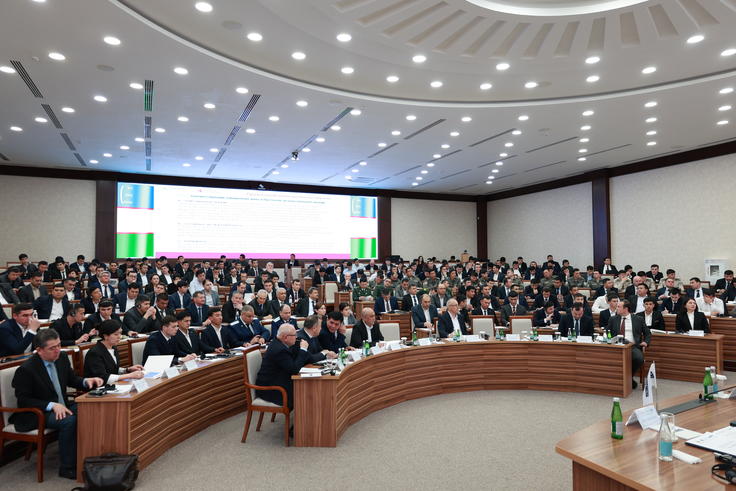
Participants of the event
The seminar was convened at the Academy of the Ministry of Internal Affairs and brought together over 250 criminal justice practitioners and firearms control authorities in person, with an additional 600 participants joining online.
The event started with a guided exhibition of explosives, firearms and ammunition, followed by practical demonstrations simulating the investigation of firearm-related crime scenes, highlighting the growing importance of forensic expertise in criminal justice responses.
Opening remarks by senior national and international officials underscored the urgency of strengthening coordinated responses to illicit firearms trafficking. Participants emphasized that the seminar served as a platform to translate dialogue into practical action, fostering stronger inter-agency and international cooperation.
Rustam Khatamov, Head of the Academy of the Ministry of Internal Affairs of the Republic of Uzbekistan, highlighted the growing scale of the threat, noting that “the scale of transnational crimes related to illicit firearms trafficking continues to expand, and this seminar provides an important platform for developing effective approaches and consolidating efforts to address this global challenge.”
In his opening remarks, Jobir Azimov, Deputy Director of the Drug and Firearms Control Agency under the Administration of the President of the Republic of Uzbekistan, emphasized the importance of recent institutional reforms and sustained national efforts, stating that “the transformation of the national Drug Control Centre into the Drug and Firearms Control Agency has significantly strengthened the country’s capacity to respond to modern threats related to illicit firearms and drug trafficking.”. He further noted that “over the past three years alone, more than 9,000 firearms and over 10,000 rounds of ammunition have been removed from illicit circulation, while nearly 6,000 firearms and 15,000 rounds of ammunition were voluntarily surrendered by citizens - reflecting growing public awareness and trust in preventive measures.”
Alexander Fedulov, UNODC Deputy Regional Representative highlighted the broader security implications of illicit firearms flows: “Illicit trafficking in firearms is closely linked to terrorism and organized crime, particularly in regions that serve as transit routes. Strengthening national regulatory frameworks, investigative capacities and international cooperation is therefore essential to effectively respond to these interconnected threats.” He further noted the growing complexity of trafficking methods, including the use of online platforms and emerging technologies such as 3D printing.
Ambassador Antti Karttunen, OSCE Project Co-ordinator in Uzbekistan, emphasized that:
“Illicit trafficking in firearms and ammunition remains a serious transnational threat that fuels organized crime, violence, and instability. Addressing it requires not only strong legal frameworks and modern technologies, but also close co-operation between institutions and across borders. The OSCE is working with Uzbekistan to strengthen professional skills, improve information exchange, and support joint efforts, because lasting security depends on shared responsibility and real collaboration.”
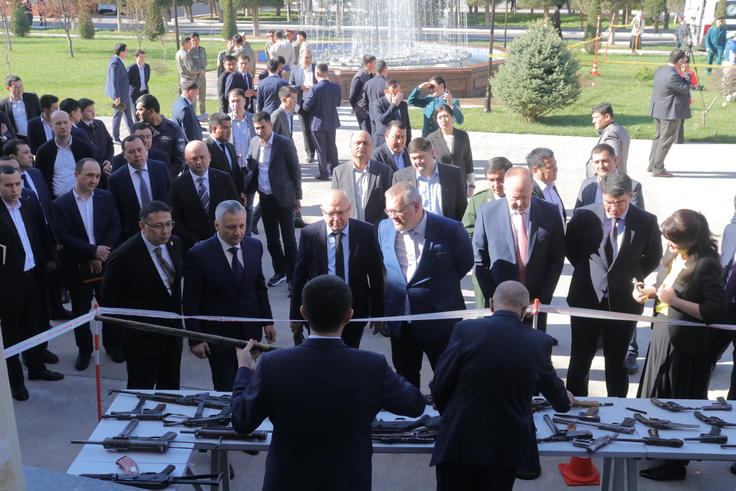
The exhibition of explosives, firearms and ammunition
Discussions throughout the day focused on a comprehensive set of responses, including strengthening legal frameworks, enhancing forensic and investigative capacities, and leveraging digital technologies. Experts emphasized the importance of firearm marking, traceability, and the development of unified electronic databases to improve control and accountability. The growing risks associated with illegal marketplaces on Darknet, unmarked and 3D-printed firearms were identified as a key emerging challenge requiring urgent policy and technical responses.
International experts stressed that effective countermeasures depend on timely information exchange and cross-border cooperation. As noted during the seminar, “information about firearms should travel faster than illegal firearms,” stressing the critical role of intelligence-sharing, international databases, and the establishment of national firearms focal points.
The seminar concluded with a set of practical recommendations aimed at strengthening Uzbekistan’s response to firearms-related crime, including enhancing inter-agency cooperation through formalized information-sharing mechanisms; promoting comprehensive prevention approaches that combine enforcement with community-based measures; and advancing technical capacity through specialized training and the adoption of modern forensic tools. By bringing together policymakers, practitioners and experts, the seminar reaffirmed Uzbekistan’s commitment to addressing illicit firearms trafficking in line with international standards, and highlighted the importance of continued partnership with UNODC and other international actors in advancing security and the rule of law across Central Asia.
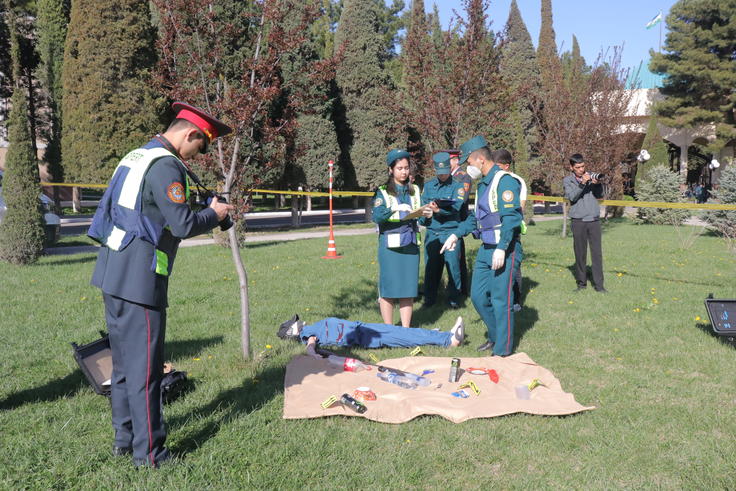
The practical demonstrations simulating the investigation of firearm-related crime scenes
UNODC stands ready to further strengthen its partnership with Uzbekistan and other member states in Central Asia by continuing to deliver targeted technical assistance, policy support and capacity-building initiatives. These efforts aim to advance comprehensive and sustainable measures to counter the illicit trafficking of firearms and ammunition, in full alignment with international legal instruments and evolving good practices.
Contacts
Contact
